
Need Help? Call Now
1-800-952-8444Free Consultation
Need Help? Call Now
1-800-952-8444Posted on May 01, 2025
Pain is something we all experience, but how we tolerate it can vary widely depending on where we live, our age, and even our mindset. Everyone has their own way of managing discomfort, from minor bumps and bruises to more significant injuries. To better understand these differences, we surveyed Americans nationwide to uncover how people rate their pain tolerance, how long they wait before seeking relief, and which regions are the most (and least) resilient when it comes to enduring pain.
The results reveal surprising patterns: residents in some states report remarkably high pain thresholds, while others lean heavily on medication or seek professional treatment sooner. Generational habits also play a role, with older Americans more likely to “tough it out” compared to younger generations, who often dread painful situations altogether.
By analyzing the nation’s collective threshold, we’ve mapped out key trends and regional insights that paint a fascinating picture of how Americans handle one of life’s most universal challenges—pain.
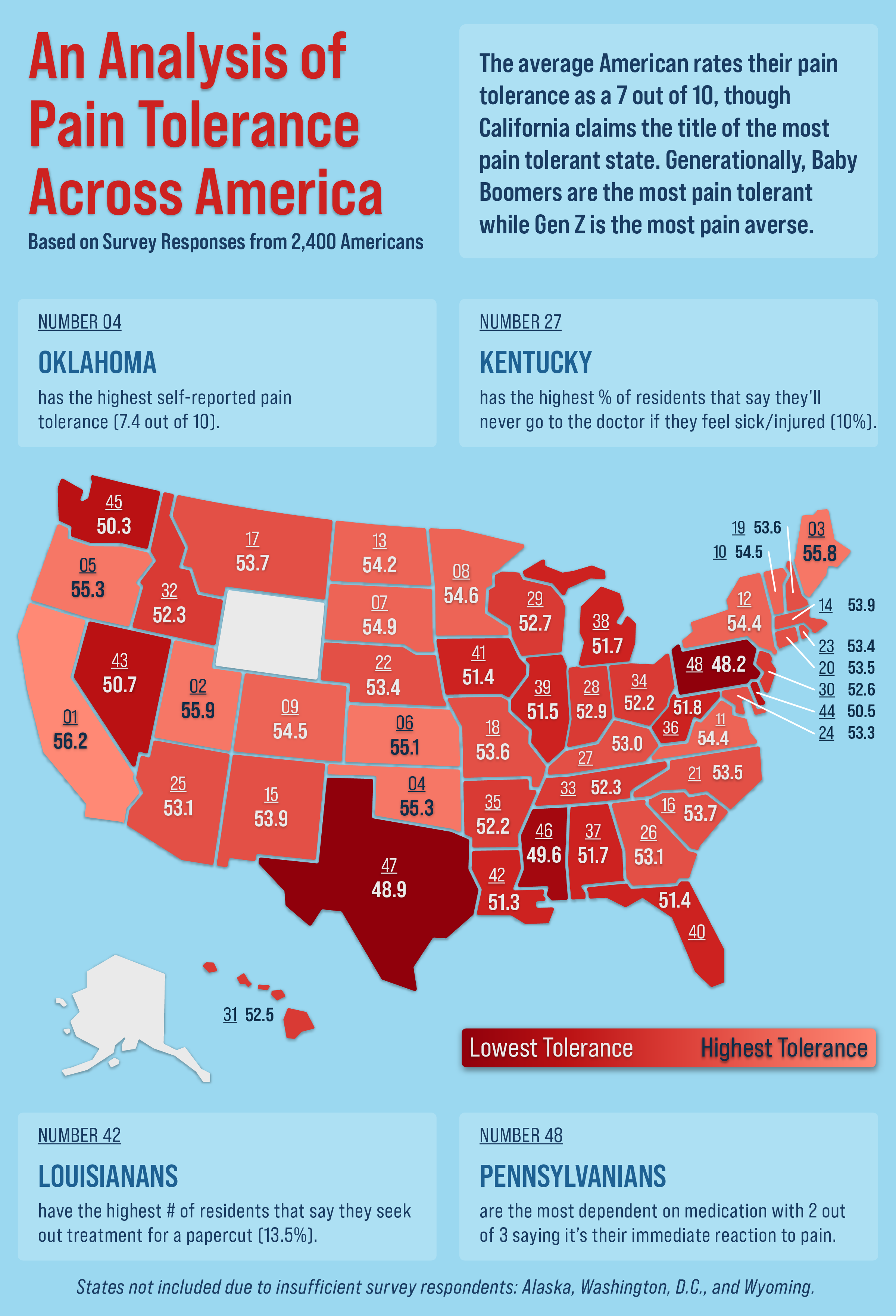
When it comes to enduring pain, California leads the nation with a reported pain tolerance score of 56.2. In California, more than half (53.6%) say they typically endure pain without medication. This may reflect the state’s active, outdoor-focused culture, where residents frequently engage in activities like hiking, surfing, and skiing — experiences that often build physical resilience.
Close behind is Utah (55.9), another state known for its rugged terrain and outdoor lifestyle, which likely fosters a similar ability to endure discomfort. Nearly one in 10 Utahns say they never go to the doctor due to sickness or illness. The Northeast also makes a notable appearance with Maine (55.8), where harsh winters and physically demanding industries such as fishing and forestry may contribute to a culture of toughness. Just 5.7% of Maine residents say they dread painful situations (like getting a shot at the doctor or a tough workout). Rounding out the top five are Oklahoma (55.3), where residents report the highest individual pain tolerance at 7.4 out of 10, and Oregon (55.3), a state that mirrors California and Utah’s physically active lifestyle.
At the bottom of the rankings, Pennsylvania comes in last with a pain tolerance score of 48.2. This finding aligns with other trends from the state, where two-thirds of residents rely on medication as their immediate response to discomfort, suggesting a preference for quick relief over enduring pain.
Texas (48.9) and Mississippi (49.6) also rank low. Despite a self-reported pain tolerance of 7.0 out of 10, Texans are quick to seek treatment and lay low with minor pain. Similarly, one in five Mississippians actively dread painful situations. Meanwhile, Washington (50.3) and Delaware (50.5) break from regional trends, as their scores stand in contrast to the generally higher pain tolerance seen across the Western and Northeastern U.S.
Interestingly, these state-level rankings also highlight unique attitudes toward seeking care and treatment. For example, Kentucky residents are the least likely to see a doctor, with 10% saying they never seek treatment, while residents in states like Louisiana stand on the opposite end of the spectrum, with 13.5% seeking treatment for minor injuries like paper cuts.
Generational differences reveal a clear divide in pain tolerance, with older generations showing more resilience compared to younger Americans. Baby Boomers are the most likely to embrace a “keep going, no matter what” mindset, with 16.6% pushing through discomfort, while only 7.2% of Gen Z report the same attitude. This suggests a noticeable increase in pain tolerance as you age, with younger generations less inclined to endure discomfort and more likely to seek relief quickly.
When it comes to managing pain, reliance on medication is widespread, with 51.6% of Americans typically turning to over-the-counter remedies. However, habits vary by age. Gen X leads in medication use, with 56% opting for quick relief, while Baby Boomers are the most likely to explore alternative treatments (10%). Delays in seeking pain relief are also common: one in five Americans wait several days before turning to medication, and 44.7% postpone professional treatment for days, with 29.3% waiting a week or longer.
Gender trends show that men are twice as likely as women to avoid visiting a doctor when sick or injured, reflecting a higher tendency to “tough it out.” Despite this, certain types of pain — like toothache (58.4%) and earache (54.3%) — are universally difficult to endure, as these appear to be the least tolerable types of pain. Pain aversion is especially pronounced in younger generations, with 15.8% of Americans, particularly Gen Z, actively dreading painful situations like getting a shot.
Overall, the findings highlight a generational shift: Baby Boomers demonstrate a higher threshold for pain and a willingness to persevere, while Gen Z is more pain-averse and quicker to seek relief. Whether due to modern healthcare access, cultural norms, or changing attitudes, it’s clear that Americans’ ability to tolerate pain is evolving over time.
Pain is a universal experience, but how we respond to it is shaped by where we live, our age, and our mindset. From California’s high pain tolerance to Pennsylvania’s quick reliance on medication, this study reveals fascinating trends in Americans’ ability to endure discomfort. Generational differences highlight a clear shift, with Baby Boomers showing resilience while younger generations, like Gen Z, are more likely to seek immediate relief. Across the board, factors like lifestyle, healthcare access, and cultural attitudes all play a role in how we manage and perceive pain.
Experiencing physical pain is difficult enough. If you’re facing prolonged challenges due to medical malpractice, Weiss & Paarz can help alleviate the burden. Our team of experienced medical malpractice attorneys is dedicated to helping patients seek justice and compensation after suffering unnecessary pain and harm. Contact Weiss & Paarz today to learn how we can support you through this difficult time.
The data is based on over 2,400 survey respondents. States not included due to insufficient survey respondents: Alaska, Washington, D.C., and Wyoming. The state ranking is based on how residents answered a series of questions about their reactions to pain, plans for anticipated pain, and self-reported pain tolerance. The ranking is on a scale of 0 to 100, with 100 indicating the highest possible pain tolerance and 0 indicating no pain tolerance at all.
Call 1-800-952-8444